‣
Your Digital Companion
Welcome, Journal Owner.
This is your private space — an extension of The AI-Friendly Wellness Journal designed to deepen your practice beyond the pages.
No login. No email required. Just you and the work.
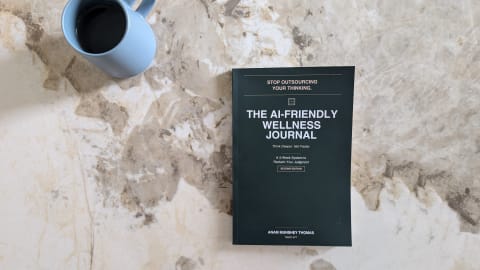
✉ Letter to the Reader
If you're here, it means you've opened the journal — or you're considering beginning the practice. Either way, welcome.
This journal was created during a moment when the world feels like it's accelerating. Artificial intelligence, constant information, and the pressure to move faster can quietly pull us away from something essential: the ability to think clearly and reflect deeply.
The purpose of this journal is simple. To create a small daily space where your own voice is louder than the noise around you.
The prompts aren't designed to produce perfect answers. They're designed to help you notice patterns, ask better questions, and reconnect with what matters to you.
If you choose to use AI alongside the journal, treat it as a thinking partner — not an authority. Your insight, your judgment, and your lived experience are always the foundation.
Thank you for taking the time to reflect. In a fast-moving world, that choice matters more than most people realise.
— Trust AI™
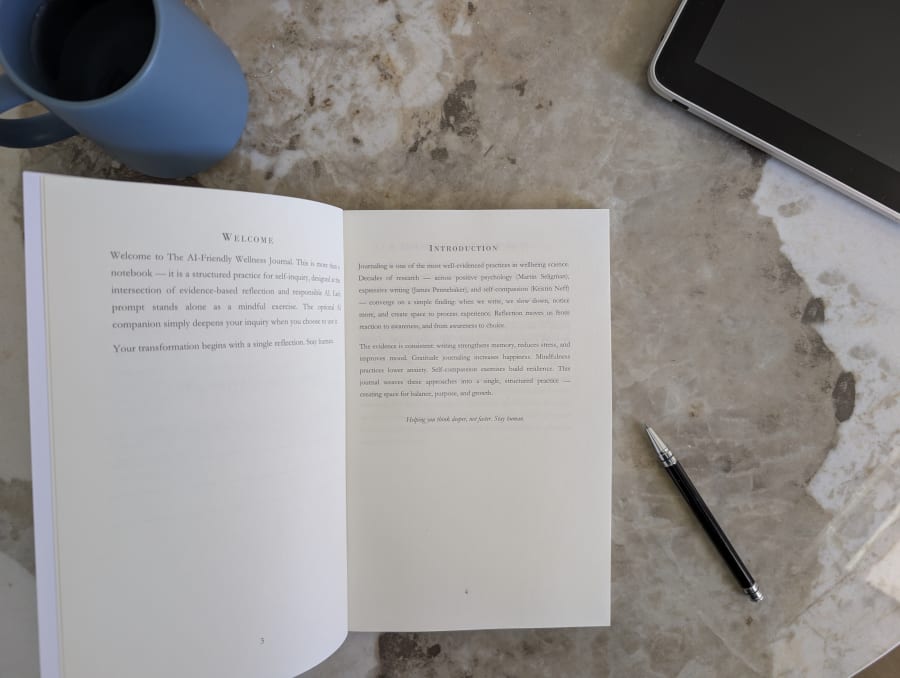
The 7-Day Activation Guide
Your first week, mapped out. One prompt per day with a simple reflection rhythm to build the habit before you even think about it. Whether you're a first-time journaler or returning to the practice, this gives you a clear, low-pressure starting point.
Sample Prompts
AI Prompts by Theme
Your journal includes optional AI prompts, and the journal is complete without them. If you choose to use one, give the AI only the general question and keep your journal entry to yourself. If context helps, use a fictional or generalised example, and leave out names, contact details, health or workplace information and anything that identifies you or other people. Do not upload photos or scans of your pages.
01
Foundation
Weeks 1–3
Gratitude · Mindfulness · Resilience
- "What helps people notice gratitude in an ordinary week?"
- "What are some simple ways to bring more attention to everyday moments?"
- "What questions can help someone reflect on how they recover from setbacks?"
02
Self-Awareness
Weeks 4–6
Self-Compassion · Balance · Empowerment
- "What questions might help someone notice when they are being harder on themselves than they would be on a friend?"
- "How do people tell the difference between what they feel they should do and what they need?"
- "What small practices help people feel more in charge of their choices?"
03
The Shift
Weeks 7–9
Connection · Purpose · Joy & Celebration
- "What questions help people reflect on the relationships that matter to them?"
- "How might someone explore what gives their life and work a sense of purpose?"
- "What are simple ways to notice and celebrate small wins?"
04
Integration
Weeks 10–12
Creativity & Flow · Growth · Cognitive Clarity
- "What conditions help people get into a state of creative flow?"
- "What questions help someone notice how their thinking has changed over time?"
- "What habits support clearer thinking when information arrives all day?"
A reminder: AI tools can be inaccurate, and nothing an AI says is an authoritative assessment of you or anyone else. Do not use AI to diagnose a condition, make treatment decisions or seek emergency support, and do not assume an AI conversation is confidential. Treat any response as a suggestion to weigh against your own judgment. Your handwritten journal is always the foundation.
Monthly Practice
Reflection Templates
At the end of each month, step back and see the larger arc. These templates are designed to take 15–20 minutes and work whether you've journaled daily or sporadically.
Each template helps you:
- Notice which themes resonated most (and why)
- Identify patterns in your thinking across weeks
- Set a gentle intention for the month ahead
- Decide whether to adjust your pace or approach
Community
Share Your Reflection
If you've been journaling for a while, take a moment to pause and reflect on the experience itself. What has surprised you most? Which prompt or theme stayed with you the longest? What shifted in how you think or feel since you began?
Your perspective may help someone else begin their own reflection journey.
Leave a review on AmazonStill Exploring?
If you arrived here without the journal, here's what this practice is about: a guided practice with unique prompts across research-informed themes, designed for leaders and professionals who want to think more clearly in the age of AI.
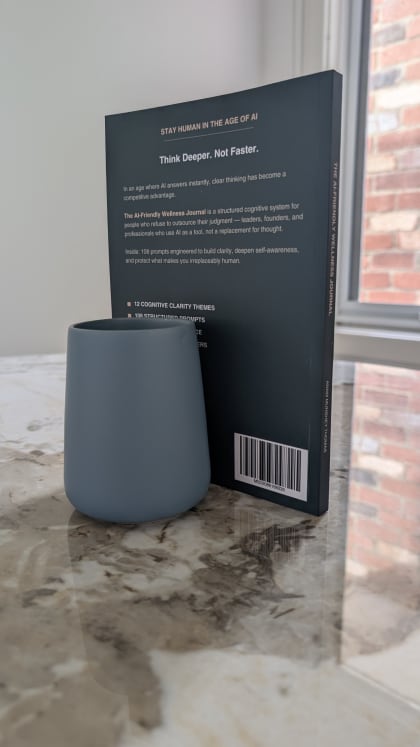
167 pages · 108 prompts · 12 themes · 90-day arc
Available on Amazon
The Trust AI™ Library
Part of a three-book library.
The Journal Page Resources